
The first thing you notice when you arrive in Japan in July is the humidity that makes your shirt stick to your skin and your pants to your knees. Under the sun, the 30+ degree heat feels unbearable. And even on a cloudy day, the heat sneaks up on you, feeling somewhat manageable at first until you realize that your backpack has now stuck itself on your back. This was pretty much the daily experience over the two and a half weeks I spent in Japan this July.
It’s feels like an immense privilege to travel to Japan at this time. Tourists are still banned from entering the country (except as part of closely supervised tour groups), but one can still get a visa for various reasons – for exchange studies, an internship, or to visit family. Once you get your visa in order, the immigration process upon arrival is surprisingly smooth: I’ve had more questions asked about my purpose for visiting the country when coming on a tourist visa.
Entering the country right now mostly involves walking a long distance in an empty and quiet airport. After walking through the corridors for a while, some staff check your pre-registered health information (e.g., your vaccination status and results of a PCR test) and (hopefully) give you a blue note indicating that you’ve passed the checks and that you’re coming from a blue country which means you won’t have to stay in quarantine for a few days. At regular intervals during the long march to immigration and customs airport staff eye the color of the paper you’re carrying and wave you onwards to immigration if you’re carrying the Blue Slip.
A lot of the variety shows, ubiquitous on TV in Japan, include an educational aspect. A lot of what you might see in these shows involves a studio full of celebrities – comedians, entertainers, singers and actors who are usually there to promote their upcoming TV shows – watching a pre-recorded video featuring some of the studio visiting a historical location with an expert, usually a university professor, explaining just what happened there hundreds of years ago. The shows often tend to focus on an event in the Sengoku period, usually involving Oda Nobunaga and/or Tokugawa Ieyasu. The celebrities in the studio then have to react with surprise when hearing that some remote beach in Chiba was a place where either Oda or Tokugawa landed once (an actual show I saw).
Anyway, a show I saw (Buratamori) had some interesting details about an area of northern Kyoto I’m familiar with for several reasons. In it, the host of the show – Tamori, together with a sidekick – explored the neighborhood and its sights. As part of this on foot expedition, the show explained the history behind the name of the Kamo River (stay with me here) that runs through Kyoto. The Kamo river begins as Kibune River in the mountains northeast of the city, changing its name into the Kamo River as it runs through the northwestern part of the city before merging with the Takano River in Demachiyanagi and passing through central Kyoto, after which the river is again called Kamo River. But although the name of the river both before Demachiyanagi and after it is read as “Kamo,” it actually consists of two different kanji (Chinese character) spellings.
Its pre-merger name is Kamo River (加茂川), with the last character of three vertical lines meaning “river.” This name is derived from the surname of the people (Kamo) that used to live in the northwestern part of the city before the capital was moved from Nara to Kyoto, meaning that the history of the name goes back all the way to the 8th century CE. The houses of the Kamo families are still present in the neighborhood around the shrine, though the current houses are definitely not from the 8th century. But following its merger with the Takano River, the Kamo River becomes Kamo River (鴨川). Here, the meaning of the kanji character is much simpler: it just means “duck.”
I hear that the service industry in Kyoto is in the doldrums. A lack of international tourists has already hit the industry hard, but people are also quitting just because they don’t find the jobs that appealing, at least not in the long run. What’s in demand among at least some of these jobseekers are office jobs, but Kyoto just doesn’t have enough of them to go around.
On Thursday July 7 I saw on Twitter that Abe Shinzo was going to be in central Kyoto to campaign for Yoshii Akira, the LDP’s candidate in Kyoto prefecture for the upper house elections that were held on Sunday, July 10. I half-jokingly said to my partner that maybe we should go hear him speak, but ultimately decided to instead head to Kifune Shrine, thinking (incorrectly) that, since it’s located in a narrow and forested gully between mountains, it would provide some relief from the relentless summer heat.
This expectation was partially true: thanks to thick tree coverage, the area is shaded and feels a little cooler than the rest of the city. But we did not take into account that if you don’t take the bus from the Kibuneguchi Eiden railway station up to the shrine, you have to walk 2.5 kilometers up a small incline to the shrine. Despite being drenched with sweat as we reached the shrine, it is worth it: it’s a very pretty shrine (but I didn’t really take any good photos of it – apologies). Since it was tanabata, I wrote down a wish on a yellow slip of paper and tied it to a tree branch, while my partner tried her luck with an omikuji fortune (this time, the fortune was not good, and so the omikuji too was tied to a string set up for just this purpose).
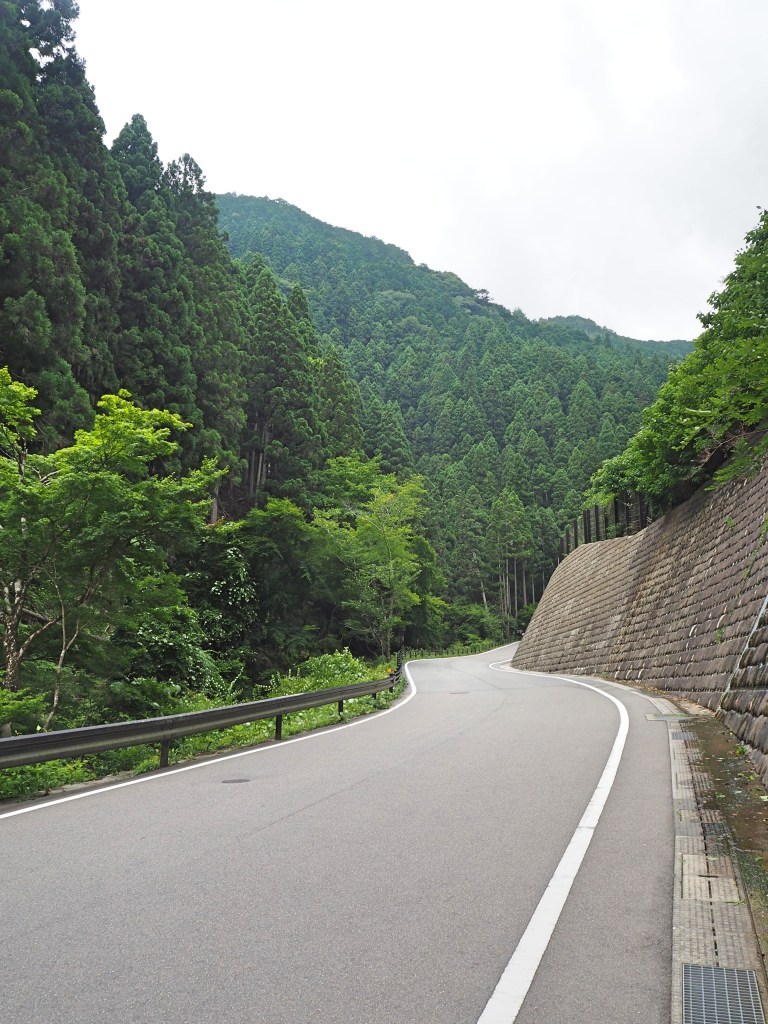
Sitting down for a breather before heading back down to the train station, I checked Twitter and was stunned to read that Abe had been shot while campaigning at Nara, a neighboring prefecture. As we waited to board the bus back to the station (we were not eager to walk back the 2.5 kilometers back) I overheard other people checking their smartphones and exclaiming “Abe Shinzo’s been shot in Nara!”
In the evening, we walked a short distance for dinner. The TV was on, and the shooting was naturally the top story: news broadcasts constantly repeated phone footage of the shooting and reactions to the event from Prime Minister Kishida Fumio and leaders from other parties. At around six PM, the news announced that Abe had died in hospital, and the news quickly switched to discussing his legacy and the motives of the killer. Discussions of Abe’s legacy and the political ramifications from his killing ended up dominating TV news for the remainder of the trip.
It’s a big shock. Putting aside the fact gun violence is and political violence (in recent times) have been rare, Abe was Prime Minister for nearly a decade, a sign of stability following a five-year period of prime ministers changing almost every year…
But I’ll leave it at that – I don’t intend to make this post about his legacy or achievements, and I am sure people far more knowledgeable than me have already done so or are in the process of doing so. What’s important to know is just that people appear genuinely shocked at the news – and surprised that things like this could happen in Japan.
This is a silly observation, but there are not really many cool places in Japan in July; not if you decide to head further west (or south) from Kyoto, anyway.
So to fully take in the summer, we made a quick trip to Naoshima, a mountainous island in Kagawa prefecture on the Seto Inland Sea. The island isn’t big; with an electric bicycle, you could easily get from one side of it to the other in about 20 minutes (a normal bicycle will take longer, thanks to those aforementioned mountains). It was sunny and hot, and the island – surrounded by the glittering and light-blue Seto Inland Sea – beautiful.
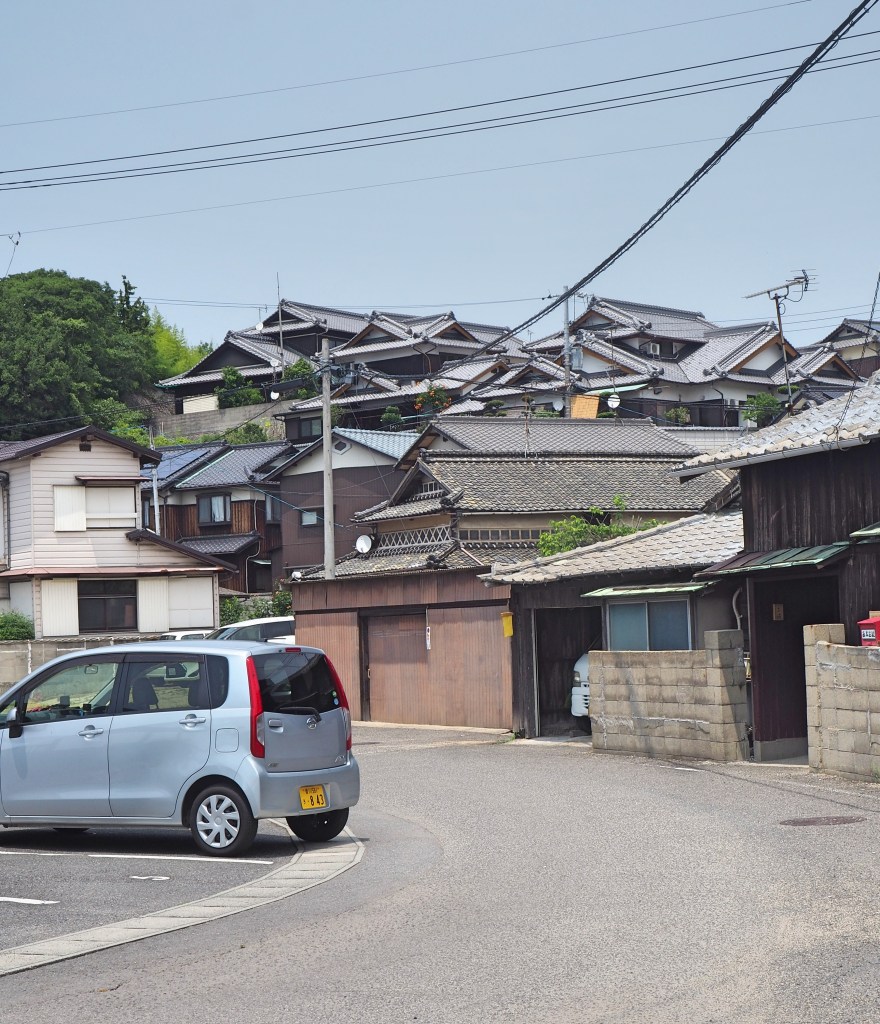
The island is known for art: Benesse Corporation, an Okayama-based education firm, has built several art museums in the southern part of the island. The art is enjoyable in itself, but the museums – consisting mostly of beautiful Ando Tadao-designed buildings on the southern mountain slopes of the little island – make the place feel really unique. No wonder then that although visiting the island outside the main tourist season (and so many places were shut), we were certainly not the only tourists there: the electric bicycles ran out soon just after we had rented ours.
I’ll be posting some photos from the trip on my Instagram account.
 Eero Tuorila
Leave a comment