Another summer vacation and another trip to Japan has come and gone. Since I don’t seem to do much else with this website (except paying for the annual domain name bill, slightly adjusting my self-introduction every now and then and updating the list of stuff I’ve written with my newest work), I thought the annual summer trip should offer a good opportunity to write something here.
The biggest change from last year was that tourists were back. I imagine it must be a huge lifesaver for all the tax-free-service touting pharmacies and other shops aimed at tourists that line the streets of (among others) Dotonbori in Osaka and Shijo in Kyoto. Naturally, the resurgence in foreign tourism has again led to grumbles of “tourist pollution” among locals, particularly in Kyoto. Personally, I think it’s nice that tourists are back, as it means more people get to visit and experience country that I love – but also understand that for those commuting on buses in Kyoto, the return of visitors with their big suitcases is a cause for concern.
As for the weather: it was hot and humid, but there weren’t as many scorching hot and sunny days as last year when we visited in July. Despite fears that traveling to Japan during the height of the rainy season might mean needing to carry an extra pair of socks and a spare t-shirt wherever we went, it also wasn’t particularly rainy.
The Izumo shrine.
As always, we spent a lot of time in Kyoto, but our annual trip-within-a-trip had us visiting Izumo in Shimane prefecture. When we visited the Izumo Shrine, there weren’t as many people as I had expected – June isn’t the main tourist season for the area, I suppose. Visiting the shrine was worth the 5-hour one-way trip from Kyoto. The size of the building where the god is enshrined (the honden) made a real impression: there was a small element of revelation involved, as you could only grasp its massive size when you walked along the perimeter wall surrounding it.
The trip to Izumo from Okayama and back was on board the Izumo special express, a truly beautiful train that I wish I had taken more (competent) photos of. Views from the train during the trip between the two cities were spectacular, as it ran next to a shallow mountain river snaking its way through narrow mountain valleys and ravines, from the coast of the almost Mediterranean-like Seto Inland Sea to the coastline of the cold Sea of Japan. The train ride again reminded me of how beautiful Japan can be.
Culinary highlight of the whole trip: lunch at a seafood restaurant on Awaji Island. Really, everything (a lot of sashimi) we ate on the island was pretty good, except maybe the highway rest stop spaghetti dish that was more udon than spaghetti (it was still good, though).
As for the event highlight of the trip: we went to see Kyoto Sanga F.C. play Yokohama FC (highlights here) at Kyoto Sanga’s home stadium in Kameoka, a semi-rural city a 20-minute train ride away from Nijo Station in Kyoto City. Despite its proximity to the city – though separated from it by a tall mountain range – Kameoka is a semi-rural commuter town, with the almost brand-new Kyocera Stadium where Sanga plays flanked by rice paddies.
A café in Okayama.
Last year, people still wore masks, and cheering and yelling were forbidden: this year, no such limitations were in place, and most spectators, somewhat to my surprise, went mask-free. This made a huge difference in the atmosphere, with the Kyoto ultras singing more or less non-stop for 90 minutes (the chorus of the most popular song was “our hearts burn purple,” or something like that, a reference to the purple color of home team’s kit).
The game was a real nail-biter, as the home town went down 0-1 before turning it around with two headers. A real boost for the team which had, apparently, widely been viewed as sitting on the precipice of being relegated down to J2 after barely avoiding relegation last year. I hope they stay up this year (the team is 15th at the moment).
Kusama Yayoi’s yellow pumpkin is one of two pumpkin-shaped artworks (the other one is red) on the island. It seems it was destroyed in a typhoon in 2021, and is currently awaiting repair somewhere else.
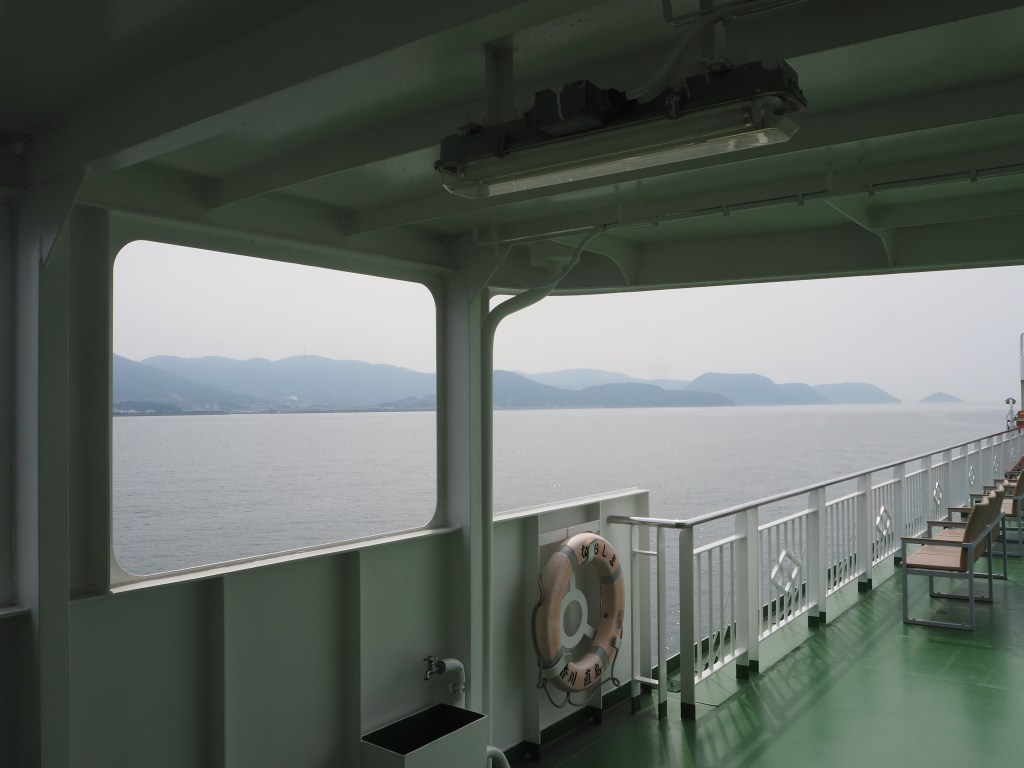
Sad to have missed it. On the other hand, the view from the southern side of the island was stunning enough even without the famed pumpkin. Cargo ships passed back and forth in the light blue sea with the tall, blue mountains of Shikoku forming a beautiful backdrop. Far away in the distance you could make out the skyline of Takamatsu, the capital of Kagawa prefecture, famed for udon (thick wheat noodles).
We had booked a room in a nice-looking hotel in Takamatsu that had a public bath on its top floor, from where you could admire the city’s skyline and the Seto Inland Sea.
But there was a price to pay for the view. The hotel is located on a mountain slope, and to get there, you’d have to drive — or walk — up two very steep roads. When checking in, we asked the receptionist whether there was an easier way for pedestrians to get down into the city. The receptionist appeared surprised at the question: who in the world would want to walk up or down those hills?
(We did, but once was more than enough – we took a taxi back to the hotel later).
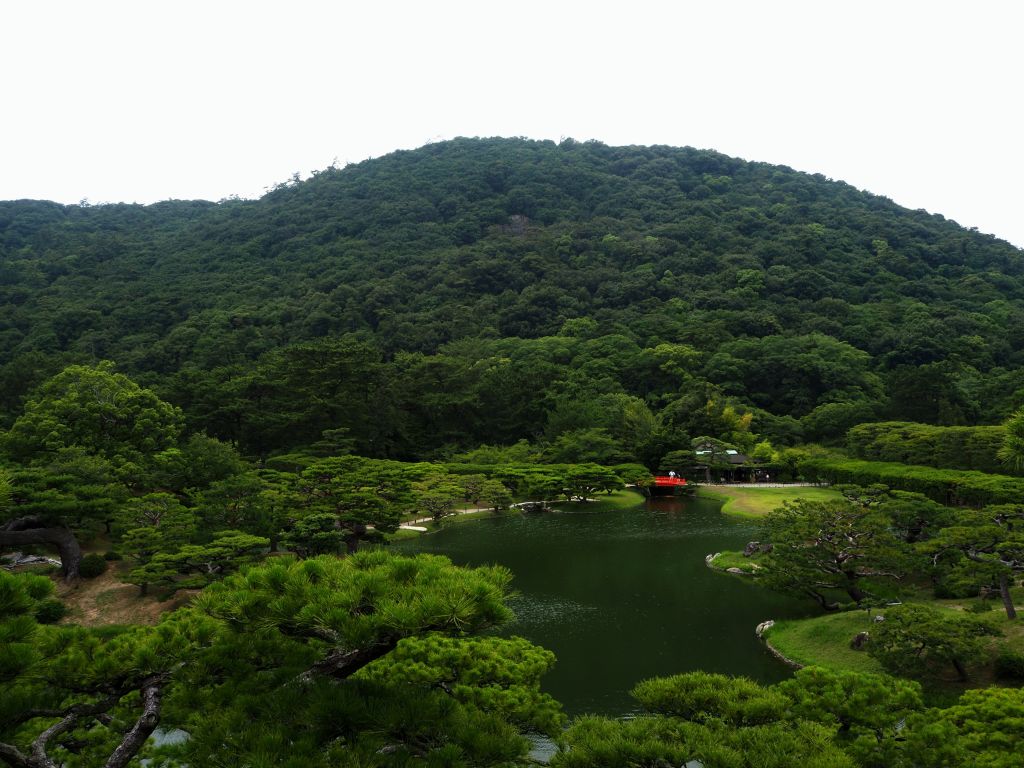
The next day we visited Ritsurin Koen, an enormous garden that really looks like an extension of two forest-covered mountains in the middle of the city. We were lucky to get a tour of the garden by a local volunteer guide, who was passionate about every aspect of it. He really had a story for all of the garden’s buildings, ponds and its famous trees and rocks.
This one fact still remains in my mind: the garden has 1,400 pine trees. Of these, 1,000 are carefully tended to, while the other 400 are left to grow freely. That is a lot of pine trees.
We half-promised the guide that we’d try and spread the word about how great the garden is. It really is great. Here’s a link to more information on the Visit Kagawa website. Please do visit it if you happen to be in Takamatsu.
Drug possession and drunk driving — these are just some of the crimes covered in Police 24 Hours, a reality show in the vein of Cops (and other, similar shows elsewhere).
One of the cases in the show involved a who was man incandescent at a worker in a convenience store. The source of his anger was a metal plate store staff had left as a ramp between the road and the sidewalk, which allowed goods to be brought from the street into the store. The man had stormed the store and accosted an (underpaid, probably part-time) convenience store worker since, apparently, he had hit the plate with his bicycle and fallen down. This came after, again, according to him, telling the store many times for months that the plate was dangerous for cyclists. Following the verbal assault by the very cross man, the worker had hit the store’s panic button and retreated into the store’s backroom.
The man’s concerns went far deeper than just the plate plate, though. While ranting at the police about the metal plate, he also had time to lament Japan’s declining population, how subsequent generations kept getting smaller, and how the country itself would cease to exist if things kept going the way they are.
The police were nonplussed; deciding to continue the discussion about the metal plate, and perhaps other hot-button societal issues, at a nearby police station.
The next segment involved a drunk man assaulting a taxi driver and, after being wrestled to the ground by a group of 4 officers, telling them to piss off. Some phenomena are — unfortunately — universal.
Coming to Kyoto in mid-July means you’re in town for the Gion festival (or matsuri), organised this year for the first time in three years. The climax of the nearly month-long festival features enormous and beautifully decorated floats being pulled down city streets, accompanied by traditional music and enormous crowds all jostling for a position in the front row to see the floats — and especially how they are turned.
See, the floats’ wheels do not turn. For the smaller floats, the men pulling them can just lift it up on their shoulders; but to turn the bigger ones, they have to throw bamboo sticks under the wheels, soak them with water, and then pull the front wheels sideways to do a 90 degree turn. It is an impressive looking move, and was greeted with deserved applause by spectators every time it happened.
This is just one part of the festival, however. Another popular part of it takes place on two evenings, when the floats are readied for the parade but are still stationary in their various locations around central Kyoto. As the sun goes down, (some of the) the roads in the city centre are closed, and the streets are lined up with stands selling food (yakisoba, shaved ice, takoyaki — the usual fare) and offering games, such as picking up goldfish. As evening falls, the lanterns that cover the back of many floats light up, bringing a nice, soft light into the dark and hot summer night. It’s a fun event, as long as you can withstand the crowds.
Having been cancelled due to COVID-19 two years in a row, some had perhaps forgotten how crowded the festival gets. I overheard tons of people expressing surprise at the number of people, with others lamenting in response how “well, I suppose it’s been three years.” Maybe so; I’ve only ever been once before (in 2014), and even then the crowds were huge.
It’s a classic thing that we all do, I suppose: complaining about crowds while also being ourselves, well, one of the individuals making up that crowd.
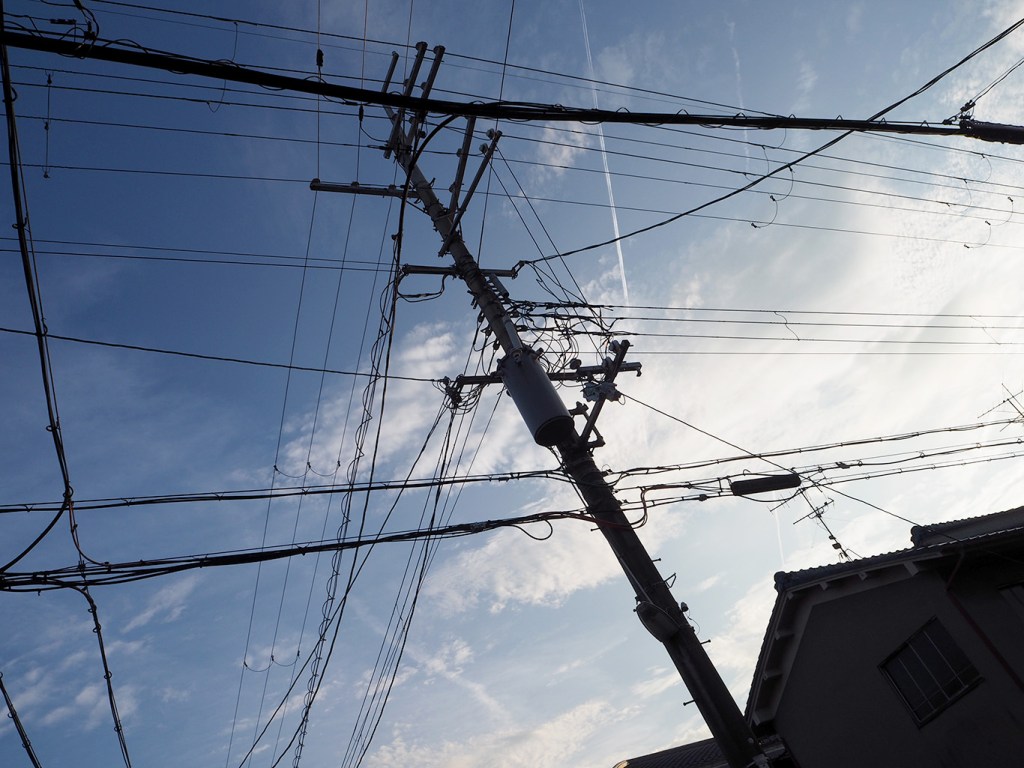
At least based on the flags you see in its streets, Kyoto is a football town. Lots of utility poles have the purple flags of Kyoto Sanga F.C. hanging from them, while posters advertising the team’s upcoming home games are ubiquitous in the city’s metro stations. The team’s standing in the city has likely been boosted further since it was promoted to J1 — the highest level in men’s football league system in Japan — after spending years playing in the division below.
I went to see the team play a home game against Hiroshima, which I later realised is ranked much higher in the league. To me, there wasn’t a clear gap between the teams, and they seemed evenly matched most of the time. The game was really intense, ending 1-1 after Kyoto Sanga equalised with a spectacular header from a player that had just come on the pitch in the second half. Despite signs discouraging spectators from hollering due to COVID-19, the goal was celebrated with a huge cheer in the home stands. For most of the game, instead of yelling, the fans cheered on their teams with intense drumming and clapping that went on for 15 minutes at a time, followed by a 2 minute break, after which it started again.
Unfortunately, I was unable to buy the home team’s purple kit since it was sold out everywhere.
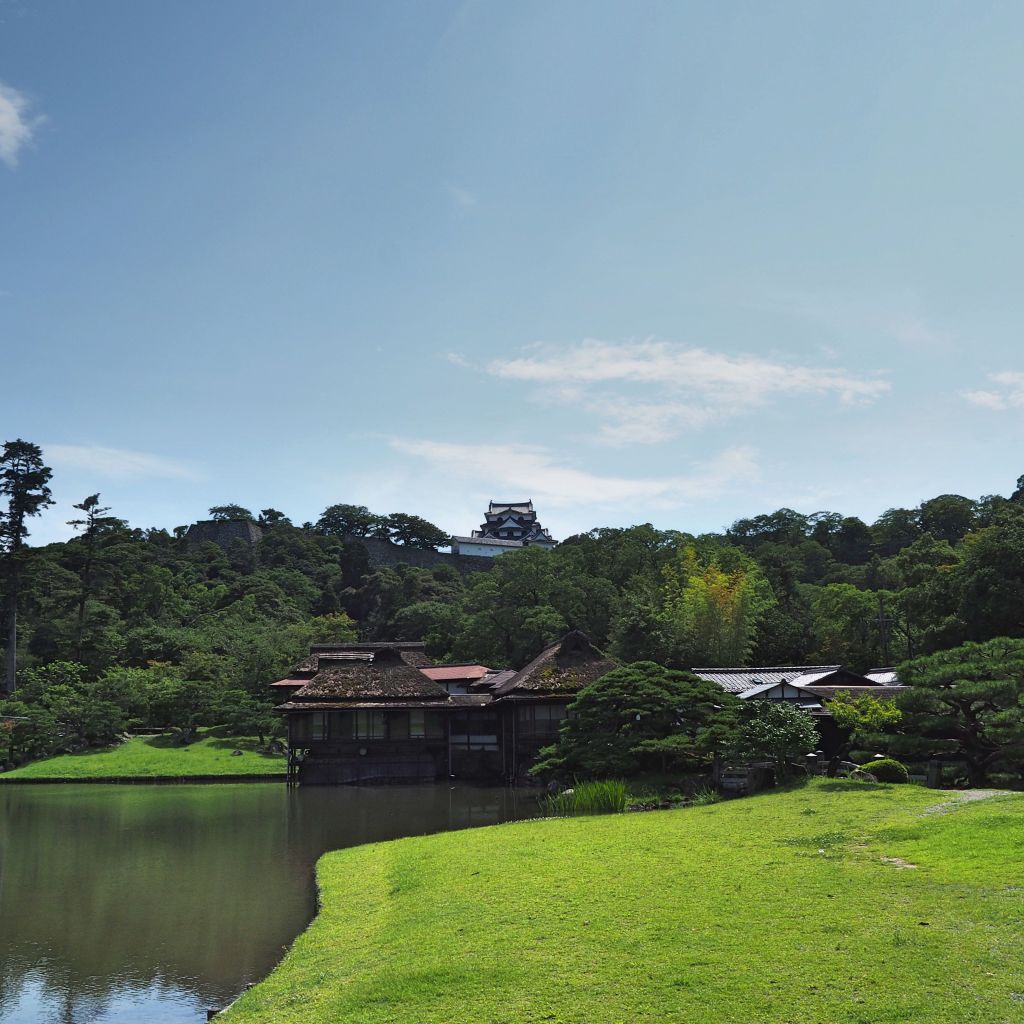
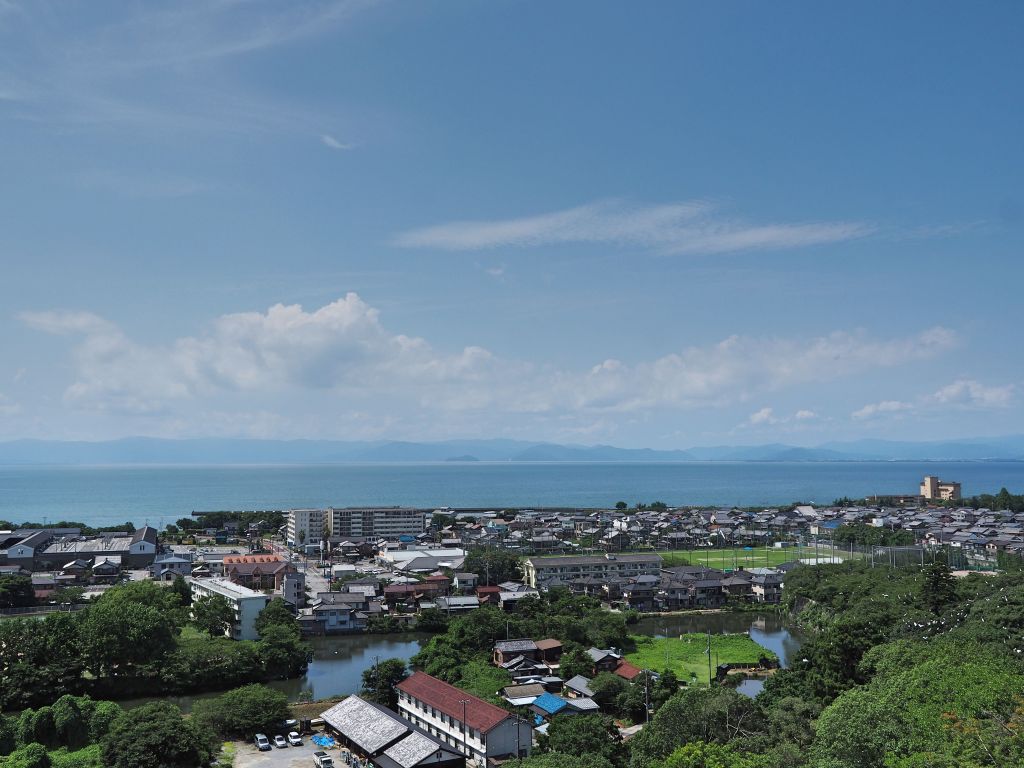
Near the end of our trip, we made a brief journey (1 hour by local train from Kyoto) to see Hikone Castle, located in the similarly-named town on the eastern side of Lake Biwa. We were again greeted with great weather: sunny, +30 degree heat and high humidity. It was therefore not surprising to see almost nobody in the area between Hikone Station and the castle: after all, who would be stupid enough to go out in the middle of the day in that heat?
The view from Hikone Castle.
After climbing up the steps to get up to the keep, we realised how lucky we were. Hikonyan, the castle’s mascot and the true star of the whole trip, was about to perform (something?) in the courtyard. Having climbed up to check the castle out, Hikonyan (i.e., a person dressed as Hikonyan) stepped out — again, in 30+ degree heat — did some poses in front of the castle as visitors took photos. Sadly, there was no opportunity to take photos with Hikonyan, although I understand that they’d rather try and minimize the amount of time the person in the costume has to spend in the heat.
The castle itself was nice. The inside of the castle is very empty (as is usual with Japanese castles from my experience), but at least the castle appears to be closer to what it historically used to be like, unlike the weird, hotel-looking Osaka castle.
The first thing you notice when you arrive in Japan in July is the humidity that makes your shirt stick to your skin and your pants to your knees. Under the sun, the 30+ degree heat feels unbearable. And even on a cloudy day, the heat sneaks up on you, feeling somewhat manageable at first until you realize that your backpack has now stuck itself on your back. This was pretty much the daily experience over the two and a half weeks I spent in Japan this July.
It’s feels like an immense privilege to travel to Japan at this time. Tourists are still banned from entering the country (except as part of closely supervised tour groups), but one can still get a visa for various reasons – for exchange studies, an internship, or to visit family. Once you get your visa in order, the immigration process upon arrival is surprisingly smooth: I’ve had more questions asked about my purpose for visiting the country when coming on a tourist visa.
Before I post anything longer, say, a paper I’ve written, I’ll start things off by just publishing a few pictures of my trip to the Netherlands earlier this year.





 Eero Tuorila